
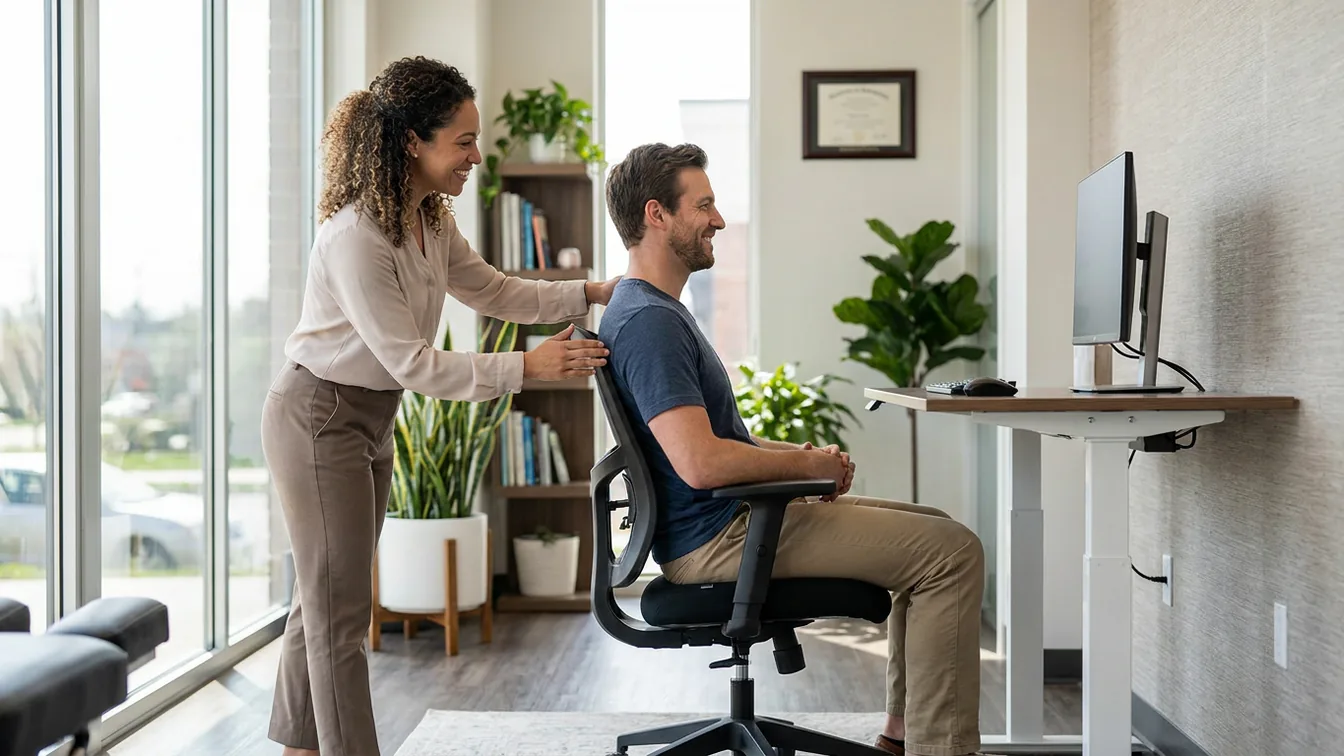
If you spend your days hunched over a laptop, driving carpool routes, or looking down at your phone, you are far from alone. Neck tension, tight shoulders, and nagging low back pain often trace back to everyday posture habits. Deciding to book a posture correction appointment is a positive step toward feeling better naturally, and a little preparation can help you get much more out of your visit.
Many people feel a bit nervous before a first chiropractic visit. They wonder what to wear, what to say, and whether it will hurt. This guide walks you through how to prepare, what to expect, and which questions to ask, so you can arrive feeling calm, informed, and ready to take part in your own care.
Start by Observing Your Own Posture Habits
The most useful thing you can bring to your appointment is information about your daily life. Your chiropractor can assess your spine and movement patterns, but only you know how you sit, stand, sleep, and work. Spend a few days noticing your habits before your visit.
Track when and where discomfort shows up. Keep a simple note on your phone. Does your neck ache by mid-afternoon? Does your lower back stiffen after a long drive? Do your shoulders creep toward your ears when you're stressed? Patterns like these help your chiropractor see how your lifestyle may be contributing to your symptoms.
Take a few photos. Ask a family member or coworker to snap a picture of you at your desk, standing in a relaxed position, or sitting in your car. Seeing your usual posture from the side can be eye-opening, and it gives your provider a realistic view of your habits.
Notice your daily routines. Think about the following:
- How many hours a day you sit, and in what kind of chair
- Whether you work on a laptop, a desktop, or a mix of devices
- How you carry a purse, backpack, or work bag
- The position you usually sleep in and the type of pillow you use
- Any repetitive activities, such as gardening, lifting, or sports
Whether you live in Bermuda Run or Clemmons, the details of your routine matter more than you might think. A long commute on Highway 158 or Interstate 40 can affect your body very differently from a job that keeps you on your feet.
Gather your health history. Write down past injuries, car accidents, surgeries, and any diagnoses such as scoliosis, arthritis, or disc problems. List your current medications and supplements as well. If you have recent X-rays, MRI results, or notes from other providers, bring copies. This background helps your chiropractor decide whether posture correction is appropriate and how to tailor your care safely.
What to Wear and Bring on the Day of Your Appointment
A little planning on the day itself keeps your visit comfortable and efficient.
Wear comfortable, flexible clothing. Your chiropractor will likely watch how you stand, walk, and move, so choose clothing that doesn't restrict your motion. Stretchy pants, leggings, athletic shorts, or relaxed trousers all work well, paired with a soft, breathable top. Avoid stiff jeans, tight dresses, or bulky layers that hide your natural alignment. If you normally wear a particular pair of shoes every day, wear them. They can reveal a lot about how you stand and walk.
Skip heavy perfume and jewelry. Remove necklaces or large earrings that might get in the way during a neck or upper back evaluation.
Arrive a little early. Plan to get there about 10 to 15 minutes ahead of time. New patients usually have paperwork to complete, including health history forms and consent documents. Arriving early means you won't feel rushed, and you can start the visit relaxed instead of stressed.
Bring the essentials:
- Photo ID and insurance information, if applicable
- Your list of medications and supplements
- Any imaging reports or medical records
- Notes on your symptoms and daily habits
- A list of questions you want to ask
- Your work or sports gear if it plays a role in your discomfort, such as a laptop bag or a favorite pair of work shoes
Eat lightly and stay hydrated. Having a small snack an hour or two beforehand helps you feel steady. Drinking water supports muscle and joint comfort, and it's a good habit to build into your posture routine anyway.
Be ready to be honest. Don't downplay your symptoms or skip over habits you feel a little embarrassed about. Slouching on the couch with your laptop every evening is extremely common. The more openly you share, the more personalized your plan can be.
What to Expect and Common Misconceptions
Knowing what the visit involves can ease a lot of anxiety. A typical posture correction appointment at a chiropractic clinic begins with a conversation about your goals, symptoms, and health history. Your chiropractor will then perform a physical assessment, which may include observing your standing and seated posture, checking your range of motion, evaluating muscle tension, and testing joint movement. Depending on your situation, imaging may be recommended, though that is not always necessary.
After the evaluation, your chiropractor will explain what they found and outline a care plan. That might include gentle spinal adjustments, soft tissue work, targeted stretches, strengthening exercises, and ergonomic advice for your home or workspace. Your care should always be tailored to you, not handed out as a one-size-fits-all package.
Let's clear up a few common misconceptions.
"Posture correction means forcing myself to stand up straight." Not quite. Rigidly pulling your shoulders back all day tends to tire your muscles and doesn't create lasting change. Good posture is about balance, awareness, and having a body that can move easily in many positions. Your chiropractor will help you build strength and flexibility so that better alignment feels natural.
"It will be painful." Most patients find chiropractic care comfortable. You may feel some mild soreness afterward, similar to what you'd feel after a new workout, but you should always be able to speak up if something feels uncomfortable. Your provider can adjust their technique to suit your needs.
"One visit will fix everything." Posture patterns develop over years, so changing them takes time and consistency. Many people notice improvements in comfort and body awareness gradually, though results vary from person to person. Think of your first appointment as the starting point of a partnership.
"Posture only matters for office workers." Everyone is affected. Teachers, nurses, tradespeople, retirees, and students all develop habits that influence how they feel. Even a relaxing evening watching a game at Truliant Field at BB&T Ballpark can leave you stiff if you've been sitting in one position for a few hours. And West Forsyth Titans families know how much time parents and students can spend in cars, bleachers, and at desks and backpacks, all of which can challenge good alignment.
Questions to Ask and How to Continue Your Progress
Your appointment is a conversation, so come ready to ask questions. A few to consider:
- What do you see in my posture, and what might be contributing to it?
- How many visits do you expect I'll need, and how often?
- What can I do at home or at work to support my progress?
- Are there stretches or exercises you recommend, and how often should I do them?
- How will we measure improvement over time?
- Is there anything I should avoid while my body adjusts?
Plan for the hours after your visit. Some patients feel looser and lighter right away. Others notice mild tiredness or soreness for a day. Drink water, move gently, and avoid strenuous activity if your provider suggests it. Take note of how you feel so you can share updates at your next visit.
Start small at home. You don't need to overhaul your life overnight. Try setting a reminder to stand and stretch every 30 to 45 minutes. Raise your screen to eye level, keep your feet flat on the floor, and take short walks during the day. Small, steady changes build the foundation for lasting improvement.
Be patient and consistent. Following your care plan, practicing your recommended exercises, and attending follow-up visits give your body the best chance to adapt. If something doesn't feel right, tell your chiropractor so your plan can be adjusted.
Take the First Step Toward Better Posture
Preparing for your posture correction appointment doesn't have to be complicated. Observe your habits, gather your health information, wear comfortable clothing, and come with questions. That alone puts you in a strong position to benefit from your care.
If you're a Clemmons resident dealing with neck pain, back tension, or the everyday strain of poor posture, you don't have to just live with it. The team at Williams Chiropractic is here to listen, evaluate your needs, and guide you toward natural, supportive care. Our Clemmons clinic welcomes neighbors from across the community, including Bermuda Run and the rest of the Triad here in North Carolina.
Ready to schedule your appointment? Visit us at Williams Chiropractic, 2850 Middlebrook Drive, Clemmons, NC 27012, and take the first step toward standing taller and feeling better.